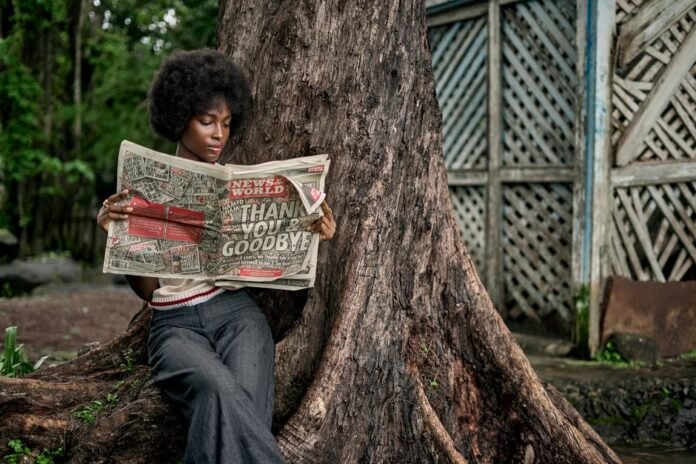
Okay, let’s be real for a second. When I hear the phrase “African news,” my brain used to immediately jump to a few, not-so-great mental images. I’d think of dusty crisis footage, political instability, or maybe a wildlife documentary. It felt like a single, overwhelming story. And honestly, it made me feel a little guilty and a lot overwhelmed. But a few years ago, a close friend of mine, Amina, moved from Nairobi to London for work. And suddenly, “African news” became personal. It wasn’t a continent anymore; it was her Friday night calls, her stories about her mom’s mango farm, and her frustration when people assumed her home was a monolith.
That’s when I realized I needed to do better. I needed to understand the difference between the bustling tech hubs of Sub-Saharan Africa and the ancient, evolving cities of North Africa. I needed to see the nuance, the joy, and the everyday life that gets lost in the headlines. So, I started digging. And what I found was a story so rich, so complex, and so full of hope that it completely changed my perspective. Let me share what I’ve learned, girlfriend-to-girlfriend.
The Two Africas I Never Knew Existed (And Why It Matters)
Here’s the thing that blew my mind: Africa is not a country. I know, I know—it sounds obvious. But culturally, economically, and even geographically, Sub-Saharan Africa and North Africa are two very different worlds. Think of it like comparing the vibe of a bustling, tropical Lagos to the ancient, Mediterranean charm of Marrakech. They’re both incredible, but they’re not the same story.
Sub-Saharan Africa, which includes countries like Nigeria, Kenya, South Africa, and Ghana, is often the place we hear about in terms of rapid growth, tech innovation, and yes, challenges. For example, I remember reading about the “Silicon Savannah” in Kenya—a hub of mobile money and startup culture that’s changing how people bank and do business. It’s not just about safaris; it’s about young people building apps and solving real problems. Meanwhile, North Africa—think Morocco, Egypt, Tunisia, Algeria—has a deep history tied to the Arab world, the Mediterranean, and the Sahara. The news there often focuses on political transitions, tourism, and the delicate balance between tradition and modernity.
I had a lightbulb moment last month when I was scrolling through Instagram and saw a post from a friend who was visiting the Atlas Mountains in Morocco. She was hiking through snow-capped peaks, then later that week, she was at a tech conference in Casablanca. It hit me: this is the reality. The news from these regions isn’t one-dimensional. It’s about a farmer in rural Mali adapting to climate change, a female engineer in Rwanda designing drones for medical deliveries, and a young artist in Tunis using graffiti to spark conversations about freedom. When I started reading news from local sources—like The Continent newsletter or BBC’s Africa Eye—I stopped feeling like an outsider looking in. I started feeling like a curious neighbor.
How I Stopped Feeling Helpless and Started Connecting (A Personal Story)
Let me tell you about a morning that changed my approach. I was sipping my coffee, scrolling through my feed, and I saw a headline about a drought in the Horn of Africa. My immediate reaction was a mix of sadness and helplessness. I thought, “What can I possibly do from my cozy kitchen?” But then, I remembered a conversation with my friend Chidera, who is from Nigeria. She told me, “The worst thing you can do is look away. The best thing you can do is listen and learn.”
So, I took a deep breath and clicked on the article. Instead of just reading the grim statistics, I looked for stories of resilience. I found one about a women’s cooperative in Somalia that was using drought-resistant seeds and solar-powered irrigation to keep their farms alive. I felt a shift. I wasn’t just a passive consumer of bad news anymore. I was learning about real people finding real solutions. That day, I decided to follow a few African journalists and storytellers on social media. Now, my feed is full of vibrant street art from Dakar, interviews with fashion designers from Lagos, and updates on renewable energy projects in South Africa. It’s not all sunshine—there are still hard stories—but it’s whole.
Another thing I started doing was looking for the “why” behind the headlines. For example, when I hear about political unrest in Sudan, I now ask: What’s the history? What are the protesters asking for? Who are the women leading the movement? It’s like peeling an onion—there are always layers. And it’s made me a better, more empathetic human. I’ve even started incorporating some of these insights into my own life. For instance, I learned about a practice in Ethiopia called “coffee ceremonies,” which are all about community and connection. Now, when I have friends over, I try to slow down and make the coffee ritual more intentional. It’s a small thing, but it reminds me that we’re all part of a bigger, beautiful tapestry.
What I Wish More People Knew (And How You Can Start Too)
If you’re feeling like I used to—overwhelmed, guilty, or just plain confused—I get it. But here’s my honest takeaway: you don’t have to be an expert. You just have to be willing to expand your view. Start small. Instead of reading one big, scary article, try these simple steps:
- Follow local voices. On Instagram or Twitter, look for journalists, artists, or activists from specific countries. My personal favorites are @everydayafrica (for beautiful, everyday stories) and @theafricareport (for thoughtful analysis).
- Read a book by an African author. Fiction is a gateway to understanding. I recently devoured The Girl with the Louding Voice by Abi Daré (set in Nigeria) and The Map of Salt and Stars by Jennifer Zeynab Joukhadar (which weaves Syria and North Africa). It made me feel the culture, not just learn it.
- Watch a documentary or series. Netflix has some gems, like Mali Blues (about music in Mali) or The Great Hack (which touches on data and politics globally, but has African angles). It’s way more engaging than a dry news report.
- Ask questions with curiosity, not pity. If you have a friend from Africa, ask them, “What’s something you love about your home that most people don’t know?” You’ll be surprised how much you learn.
I’ll be honest—I still have moments where I feel like I’m just scratching the surface. But that’s okay. The point isn’t to master every headline. It’s to see the people behind them. It’s to remember that Africa is not a problem to be solved; it’s a vibrant, complex, and deeply human place. And the more I learn, the more I realize how much we all have in common—the desire for safety, the love of family, the hope for a better tomorrow.
So, next time you see a news story about Sub-Saharan or North Africa, I dare you to pause. Ask yourself: Who is the person behind this story? What are they dreaming about? And then, maybe, share it with a friend. Because the best way to change the narrative is to start a conversation—one that’s honest, warm, and full of heart.
Here’s to seeing the whole picture, together. 🤍