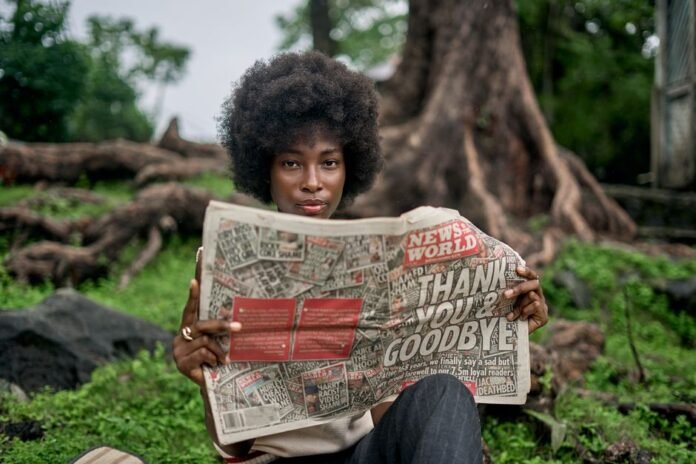
Okay, let’s be real for a second. For the longest time, I treated international news like that pile of laundry I keep meaning to fold—I knew it was there, I knew it mattered, but somehow I just… avoided it. Every time I saw a headline about a far-off conflict or a climate summit in some city I couldn’t pronounce, my brain would politely check out. “That’s not my life,” I’d tell myself. “I have a deadline at work and a kid who needs a costume for school tomorrow.” Sound familiar?
But then something shifted. It wasn’t dramatic—no sudden epiphany on a mountaintop. It was a slow, quiet realization that the world is not a separate, scary place “out there.” It’s the air we breathe, the coffee we drink, the clothes we wear. And when I started paying attention, even just a little, my own life felt bigger, more connected, and honestly, a whole lot less lonely. So grab your favorite mug, and let me tell you how I went from news-avoider to someone who actually reads the international section—and why I think you might want to join me.
The Day the World Knocked on My Door
Let me tell you about a Tuesday that changed everything. I was scrolling Instagram, half-watching my toddler build a tower of blocks that was destined to collapse, when I saw a photo. It was a woman in a market in Kenya, selling the exact same woven basket I’d just bought at a boutique downtown for three times the price. She was smiling, her hands calloused but steady, and the caption talked about how her cooperative was struggling because of supply chain disruptions halfway across the globe.
I stopped scrolling. I actually put my phone down for a second. That basket—the one I’d thought was just a cute decor piece—was a thread in a much bigger tapestry. Suddenly, the news about shipping delays and trade policies wasn’t boring. It was personal. It was about that woman’s livelihood and my little shopping habit colliding in a way I’d never considered. I felt a little embarrassed, honestly. How many other things in my life were connected to stories I’d never bothered to hear?
That’s when I started a tiny practice: every morning, before I check my email or social media, I read one international headline. Just one. Not the whole article, not the analysis—just the headline. It takes ten seconds. But it plants a seed. And over time, those seeds have grown into a genuine curiosity. I’ve learned that what happens in a small village in Bangladesh affects the price of my favorite jeans. That a drought in Brazil can change how much I pay for orange juice. The world isn’t a distant, abstract concept—it’s woven into the fabric of my daily life.
How to Stay Informed Without Losing Your Mind
Now, I know what you’re thinking: “Emma, the news is depressing. I can’t handle another story about war or disaster.” And I hear you. I really do. I used to feel that way too. But here’s the thing I’ve learned: staying informed doesn’t mean drowning in doom. It’s about choosing to be aware, not overwhelmed. Think of it like a healthy diet—you don’t have to eat kale every single meal to be healthy, right? You just need a few good bites here and there.
So here’s my no-pressure, low-stress approach to global news that actually works for me:
- Pick one source you trust. I use a simple newsletter that curates three international stories a day. No alerts, no notifications, just a calm email in my inbox. It’s like a friend saying, “Hey, here’s what’s happening—no pressure to read it all.”
- Focus on human stories, not just statistics. I skip the dry policy pieces and look for articles about people—a farmer in India, a teacher in Brazil, a teenager in Japan. When I read about someone’s life, it feels real. It feels like a conversation, not a lecture.
- Give yourself permission to look away. If a story is too heavy, I close the tab. No guilt. I’m not a journalist; I’m a human being trying to stay connected without losing my peace. That’s okay.
I remember one afternoon, I was feeling particularly anxious about a conflict in the Middle East. I’d read too many updates and my heart was heavy. My daughter came over and handed me a drawing of a rainbow. And I thought, “This is the balance.” I can care about the world and still be present for the small, beautiful moments in my own life. It’s not either/or. It’s both.
What I’ve Gained by Looking Up
Here’s the surprising part: paying attention to the world has actually made me happier. I know that sounds counterintuitive, but hear me out. When I used to ignore global news, I felt small and helpless. The world was this big, scary place I couldn’t control, so I just shut it out. But now, even a tiny bit of awareness has given me a sense of belonging. I realize that my struggles—juggling work and family, worrying about money, hoping for a better future—are shared by people everywhere. We’re all just trying to make it through, one day at a time.
I’ve also become a better conversationalist. At a recent dinner party, someone mentioned the floods in Pakistan, and instead of nodding awkwardly, I was able to say, “Oh, I read about the impact on their cotton crops. It’s so heartbreaking.” That small connection led to a real conversation about climate change and resilience. I felt like I was part of something bigger than my own little bubble.
And honestly? It’s made me more grateful. When I read about a woman in Afghanistan fighting for her right to education, I look at my own messy desk, with my laptop and my coffee, and I feel a deep, quiet thankfulness. Not in a “look how lucky I am” way, but in a “we are all connected, and I want to honor that connection” way. It’s humbling. It’s grounding. It’s like a gentle reminder that my problems, while real, are part of a much larger human story.
So here’s my heartfelt takeaway, girlfriend: the world is not too big to care about. It’s not too messy or too sad or too far away. It’s our home, and every headline is a story about someone’s life—someone who loves, who laughs, who cries, just like you and me. You don’t have to be an expert. You don’t have to read every article. Just start with one headline. One story. One moment of looking up from your own life and saying, “I see you. I care.” Because when we do that, we’re not just informed. We’re connected. And that, my friend, is a beautiful thing.
With love and a little bit of hope,
Emma 🤍